
Redlands City Directories on the Shelf
A useful search begins with a clear line between a verified volume and a hoped-for run. Redlands has one directly verified digitized directory, a strong local-history repository, newspaper indexes, and companion archives. The table separates those holdings so a family historian can tell what is online, what needs a catalog request, and what is a different kind of source altogether.
| Collection | Years | Where Held | Access |
|---|---|---|---|
| Verified Redlands volume | 1936 | FamilySearch Digital Library | Online viewer, 402 pages |
| Additional local and reverse directories | Exact run not verified | A.K. Smiley Heritage Room catalog and shelves | Ask staff; appointment encouraged |
| The Citrograph index | 1887-1896 | Heritage Room and local-history access | Index and on-site research |
| Redlands Daily Facts | 1890-present title run | Heritage Room and eLibrary | Library and authenticated access paths |
| Redlands Daily Review | 1901-1919 | A.K. Smiley Heritage Room | Local newspaper research |
The missing entries are research facts, not oversights. The inspected sources did not verify a complete publisher list, continuous reverse run, or final printed year. Ask the Heritage Room to confirm shelf titles before planning a year-by-year project. An item absent online may still be a book, card file, microfilm item, or restricted collection.
The Verified 1936 Redlands City Directory
The strongest starting point is Redlands (California) volume 1936. It includes rural sections of Mentone, Loma Linda, Bryn Mawr, and Yucaipa Valley, along with a buyers' guide and a complete classified business directory. FamilySearch identifies the item as English, identifier 805985, with 402 pages and online availability in its Digital Library viewer. That geography is wider than a modern city-limit search. A name indexed under Redlands may reflect a nearby community section included by the publisher.
The FamilySearch viewer for the 1936 volume is the direct digital access point. The separate FamilySearch catalog offers Place, Surnames, Titles, Author, Subjects, and Keywords searches, plus call-number, Film, Fiche, Image Group Number, and availability filters. Those modes help locate related material, but they do not prove that an unlisted local run never existed.
The browser could not extract a reliable resident page from the scan. Use the volume's introductory pages to confirm the key, then record the page number and exact name form you see. No invented transcription belongs in the account.
Read a Redlands City Directory Entry
A directory entry is a compact clue set, not a modern identity record. Read the surname first, then compare initials, spouse notation, occupation or business, and the street address. A nearby classified listing may explain a trade connection, while a second person at the same address may be family, a boarder, or another household. The meaning of a mark must come from the volume's own key. Older printers used short forms that change from one edition to the next.
| Surname and name | Often surname first, followed by a given name or initial. Copy the spelling as printed. |
|---|---|
| Spouse or family clue | A spouse may appear in parentheses. Treat the mark as a lead and confirm it elsewhere. |
| Occupation or business | The entry may name a trade, role, or firm connection that helps separate people with the same name. |
| Street address | Record the number and street exactly, then compare the address with the next edition. |
| Owner, renter, widow, or phone marks | Use these only after checking the edition's abbreviation key. Do not expand an unverified symbol. |
- Criss-cross directory
- An address-first section that turns a street or house number into a listed name. Its presence and years must be checked in the actual volume.
- Householder
- The person treated by the compiler as the main name for a household. It does not mean every person living at the address is listed.
- Abbreviation key
- The volume's guide to short forms and symbols. Photograph or transcribe this key before interpreting entries.
A.K. Smiley’s Redlands City Directory Shelf
The A.K. Smiley Public Library Heritage Room is the local place to test gaps in a directory search. It is at 125 W. Vine Street and is open Tuesday-Saturday from 10-12 and 1-5, with the room closed during lunch. Appointments are encouraged, but an online request is not final until staff confirms it. Call 909-798-7632 or email heritage@akspl.org. Pens are prohibited, and the researcher policy controls handling, copying, and publication.
Holdings include City of Redlands and California collections, rare books, pamphlets and ephemera from the 1860s to the present, maps from the 1850s to the present, photographs, manuscripts, and more than 100 oral histories. Projects include Citrus & Service and Citrus, Labor, and Community in East San Bernardino Valley. These materials can add a voice, club, trade, or family link when a printed listing is brief.
The A.K. Smiley eLibrary provides the library's digital doorway for genealogy, military, and newspaper databases:
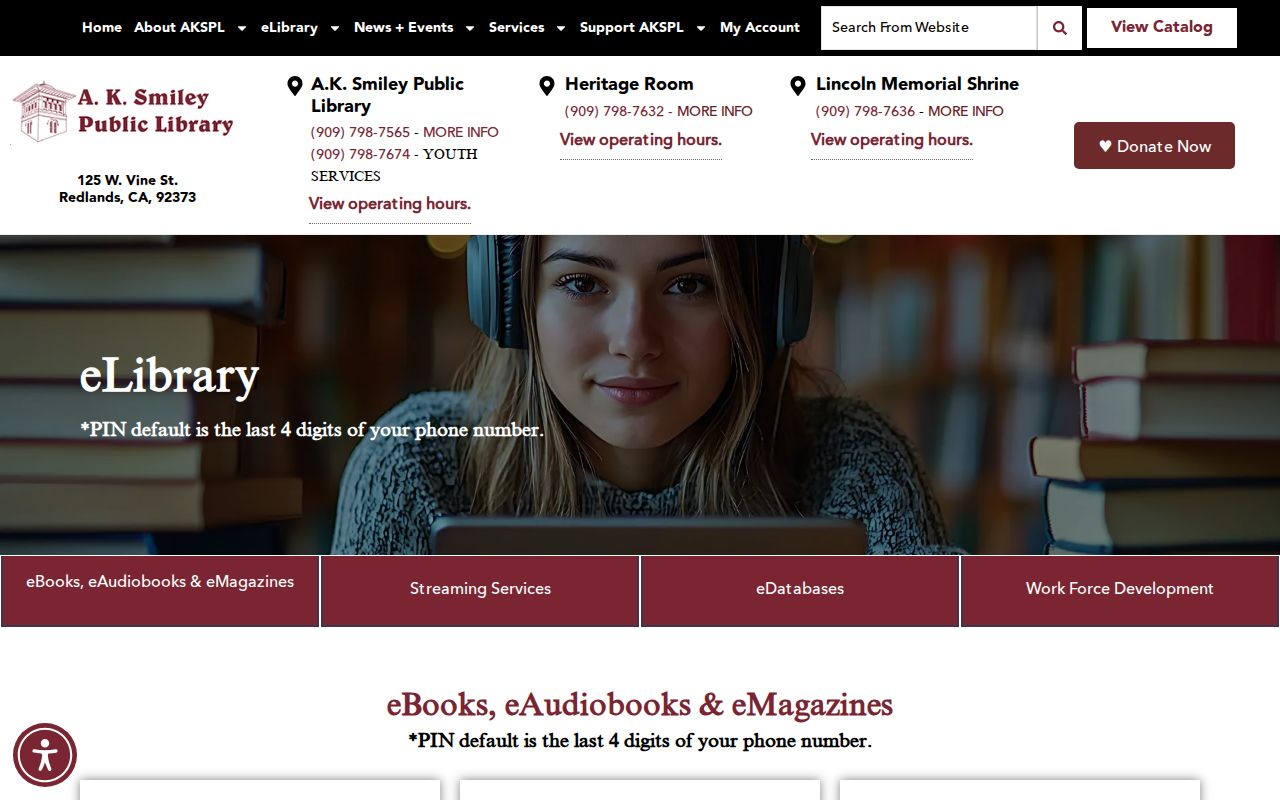
The eLibrary complements it. Ancestry Library Edition is limited to library Wi-Fi or computers, while Fold3 and newspaper tools have their own access terms.
Redlands Newspapers Fill Directory Gaps
Newspapers can explain why a name vanishes, moves, or appears under another form. The Heritage Room holds an index for The Citrograph from 1887-1896, the Redlands Daily Facts from 1890, the Redlands Daily Review from 1901-1919, The Colored Citizen from 1905-1906, and issues of El Amigo del Hogar around the turn of the century. Notices, ads, death reports, and school or club items can place a household in time, but a newspaper is not a complete roll.
The A.K. Smiley digital collections provide the library's online collection context:
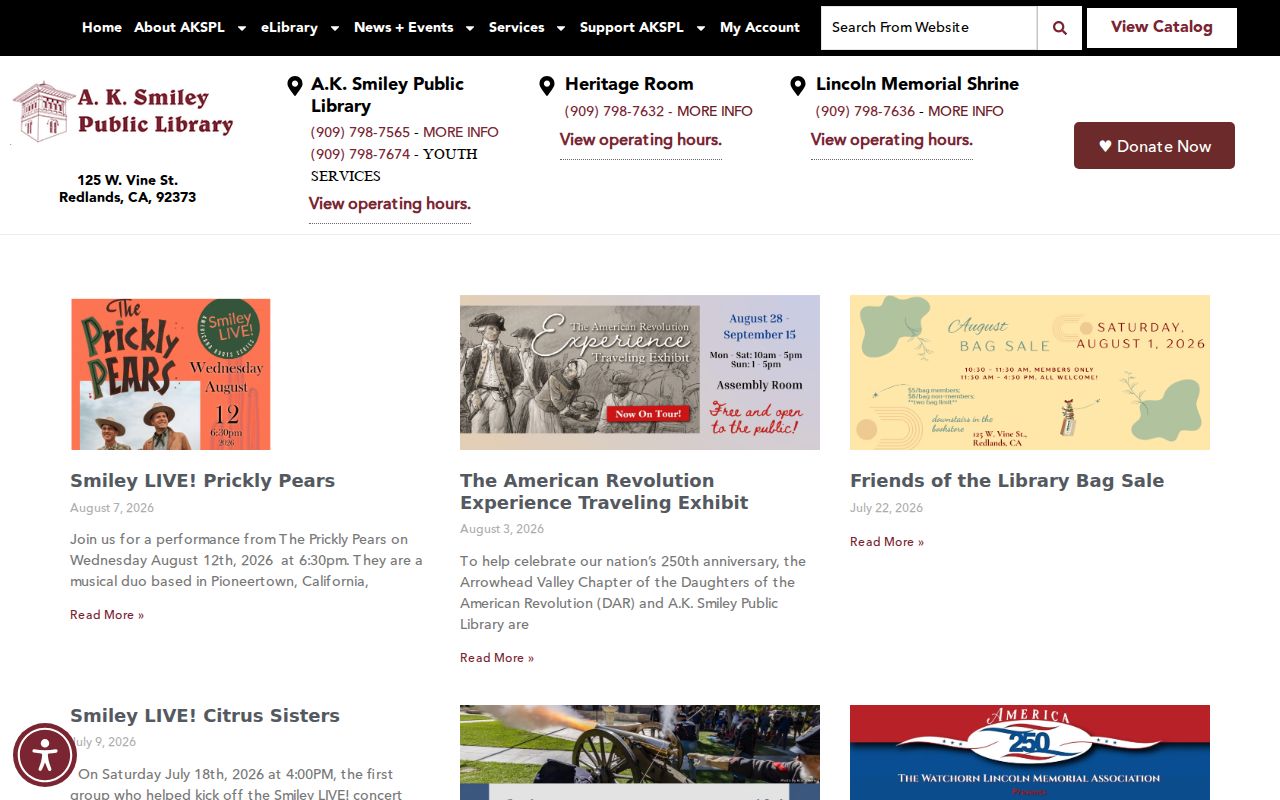
Use the image and index paths to test alternate spellings, initials, a spouse, an occupation, and the street together. A newspaper lead should then be checked against a directory, census schedule, deed, or vital-record route.
University and Regional Companion Sources
The University of Redlands Archives and Special Collections is useful for yearbooks, catalogs, photographs, campus publications, and organizational records. Founded in 1907, the university can supply a class year or campus activity as a time anchor for a name found in a directory. It does not turn an alumni reference into proof of a present address.
The San Bernardino County Museum research collections add regional photographs, maps, and community material. The Redlands Area Historical Society adds local history, while Redlands Community News is a lead for civic notices. Each repository has its own finding aids, donor limits, and copying rules.
The University of Redlands archives page shows one of the companion research routes:
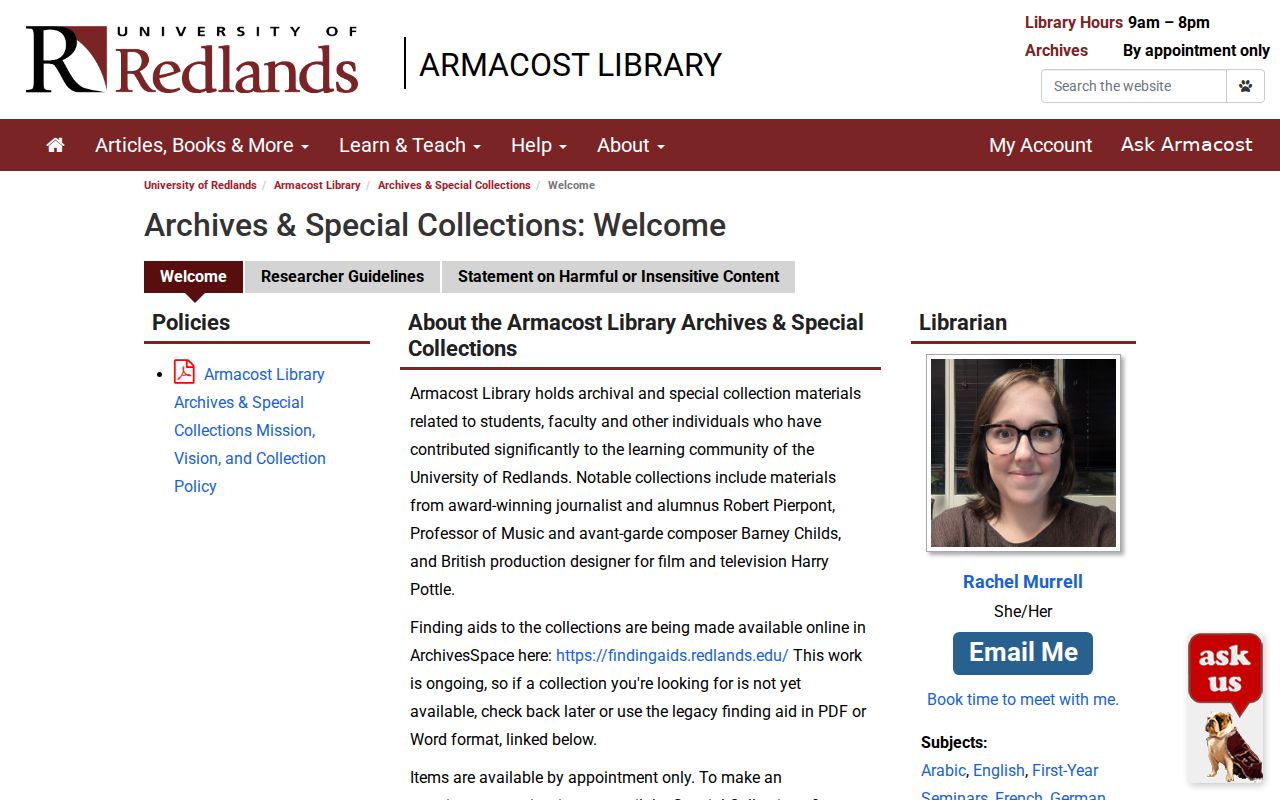
Community organizations may publish an opt-in contact list, but a private roster is not a public residents list. Ask for permission and use only the role or event detail that the organization itself makes available.
Pair Redlands City Directories with Census Years
Federal census schedules give a household snapshot, while a directory can fill the years between snapshots. Pair the 1930, 1940, and 1950 schedules with nearby evidence. The 1950 census is the latest full public census as of the research date under the 72-year rule. Use the National Archives census gateway, then compare the enumeration address, names, ages, and relationships with the printed source.
The National Archives census gateway is the access doorway that anchors the date rule:
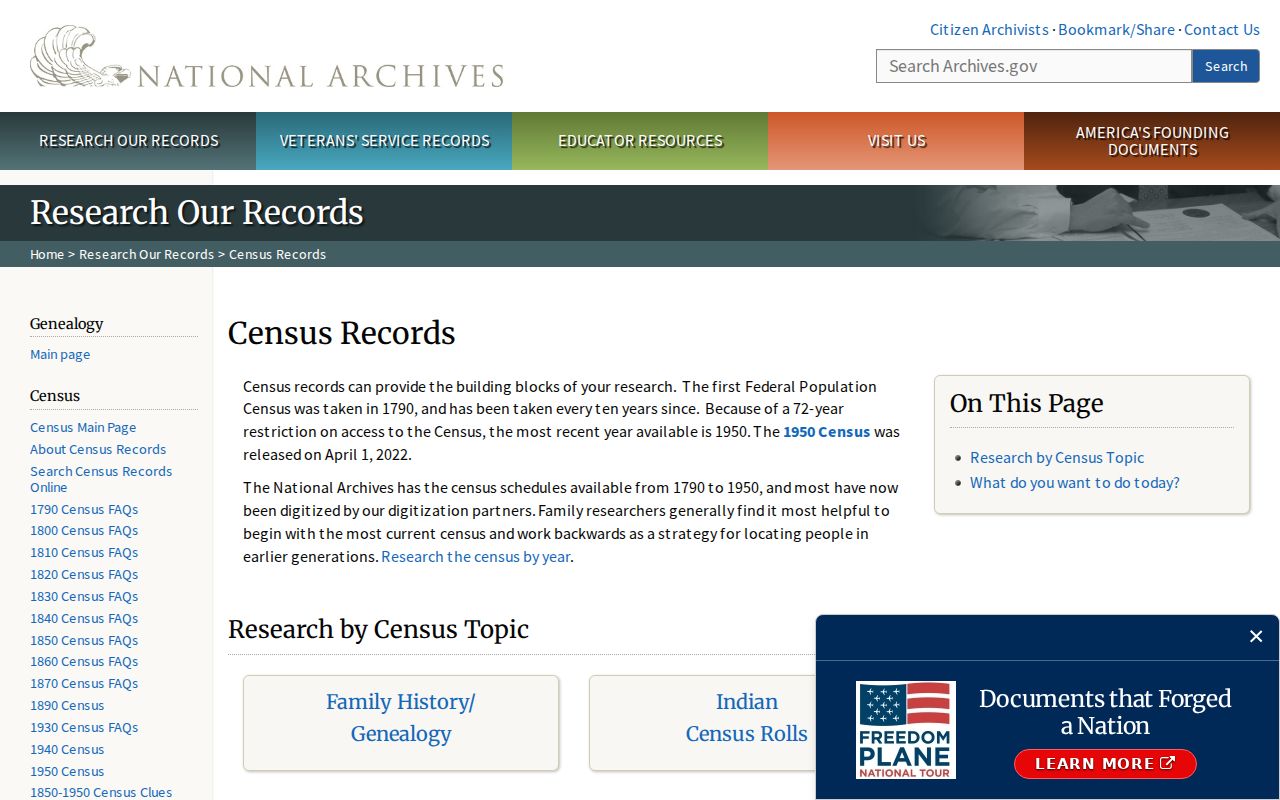
A census does not describe every year, and a directory does not list every person. If they disagree, check the enumeration date, publication date, spelling, and nearby rural sections.
Trace a Redlands City Directory Household Across Editions
A household trail works best when each printed entry is treated as a dated clue. Begin with a known person or address, preserve the printed form, and make each move explainable. Do not force one identity across every year. Show why a name, spouse, address, and outside record are likely connected.
- Find the surname in the alphabetical section and record the given name, initials, spouse notation, occupation, address, and page.
- Check the prior and next available edition, allowing for skipped publication years instead of assuming a missing volume.
- Compare the address section, if the volume has one, with the name section to identify a move or another listed household.
- Pair the closest directory with the 1930, 1940, or 1950 census and compare household relationships and street form.
- Search newspaper notices, probate material, or a vital-record application path when a person disappears.
- Log other explanations, including death, marriage or name change, military service, relocation, boundary change, or simple omission.
When a directory clue needs a present-day identity check, the Redlands resident lookup workflow can add an official record anchor. That later check should not be used to rewrite what the historical volume actually printed.
Redlands City Directory Geography
The 1936 volume's inclusion of Mentone, Loma Linda, Bryn Mawr, and Yucaipa Valley is a clear geography lesson. A publisher's service area may exceed a municipal boundary, and a postal or community name may persist after a jurisdiction changes. Preserve the section, street, and place label together. A Redlands entry does not prove that a parcel sat inside the same city limit.
A household may be found under a Redlands heading, then in a county parcel or deed record under a tract, lot, or rural legal description. A map, census district, or newspaper address can bridge the difference. The volume supplies context, not a boundary ruling.
Geography clue. Treat the directory's section title as evidence of the publisher's coverage area, then check the date-specific boundary and the record custodian separately.
Redlands Records Timeline
Institutional age explains why a name may move from one source to another. A local directory is part of a trail across county government, municipal records, library collections, and university archives.
| Year | Milestone | Why it matters for directory research |
|---|---|---|
| 1853 | San Bernardino County formed | County deed, court, and related series have an older jurisdictional frame than the city. |
| 1888 | Redlands incorporated | Earlier references may not belong to a City of Redlands municipal series. |
| 1898 | A.K. Smiley Public Library opened | Printed local memory and later Heritage Room holdings provide a research fallback. |
| 1907 | University of Redlands founded | Yearbooks and campus records can supply a time and affiliation checkpoint. |
| 1972 | Heritage Room established as archives | Local newspapers, maps, photographs, oral histories, and manuscripts gained a formal archival home. |
The California State Archives is another catalog route for state-government material, not a universal Redlands name index. Search by place, county, record group, and date before asking staff for help.
When a Redlands City Directory Run Is Unverified
Research gaps should stay visible. The exact publisher and year run for additional local or reverse directories was not verified, and the 1936 resident page and key were not extractable with confidence. No complete church-directory series, cemetery database, or reverse sequence was confirmed.
Send the Heritage Room a focused request with surname, address, likely years, and source type. Ask about a catalog record, shelf volume, microfilm item, or finding aid. Staff confirmation is better than a guessed publisher or final year. A negative online result means only that the item was not found through that path.
Log the collection, page, date, and limitation for later checks.
Redlands Reunion Research with Directories
A former classmate, military friend, relative, or birth-family lead may begin in a directory and end in another archive. Search a surname with a spouse, street, occupation, business, or class year, then compare it with a newspaper, yearbook, census, or certificate route. A strong reunion trail has more than one checkpoint.
Estate work needs the same restraint. A printed listing can place a person at an address for a narrow period, while a deed, probate file, or obituary may explain ownership, heirs, or death. A listing remains historical, not current residence proof.